







Week 1
The diagnostic
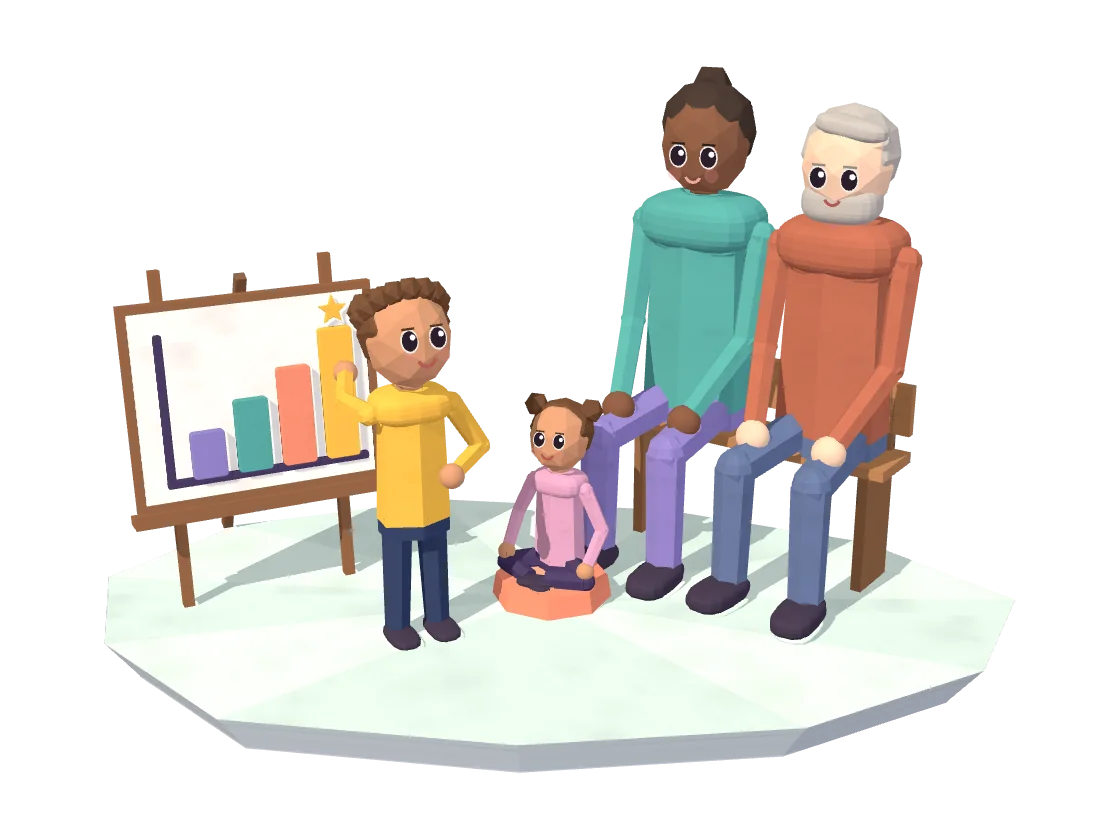
Leo reads well above grade, but adding fractions keeps going wrong. The trace: equivalent fractions never settled, and his 7 and 8 times tables are slow.
Mentor’s note
Quick, curious, loves hockey stats. Let’s use that.
How it works
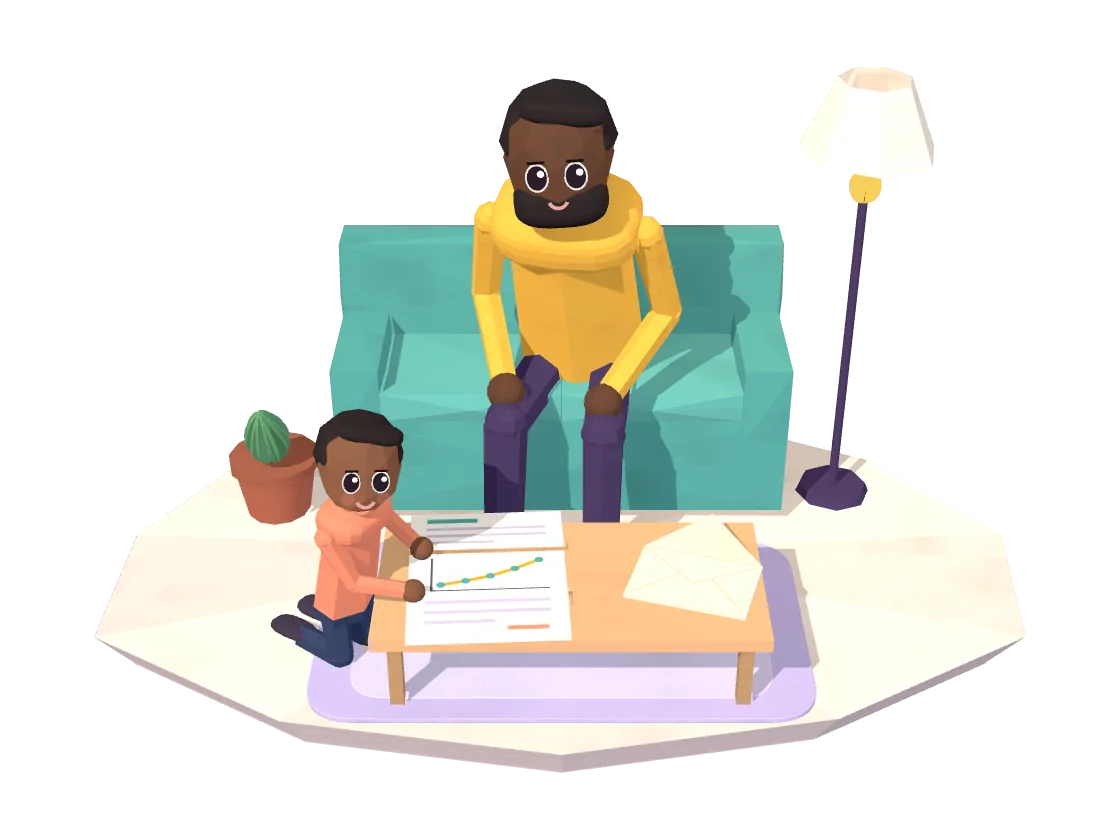
Your child starts with a diagnostic assessment that finds where any gap began. Then Hikmah Tutoring+ adds a written learning plan, one mentor who knows them by name, and practice until they really get it.

Tutoring+ at a glance
Hikmah Tutoring+ is tutoring that fixes today’s gaps at the root, then builds what your child will need next.
Illustrative example.
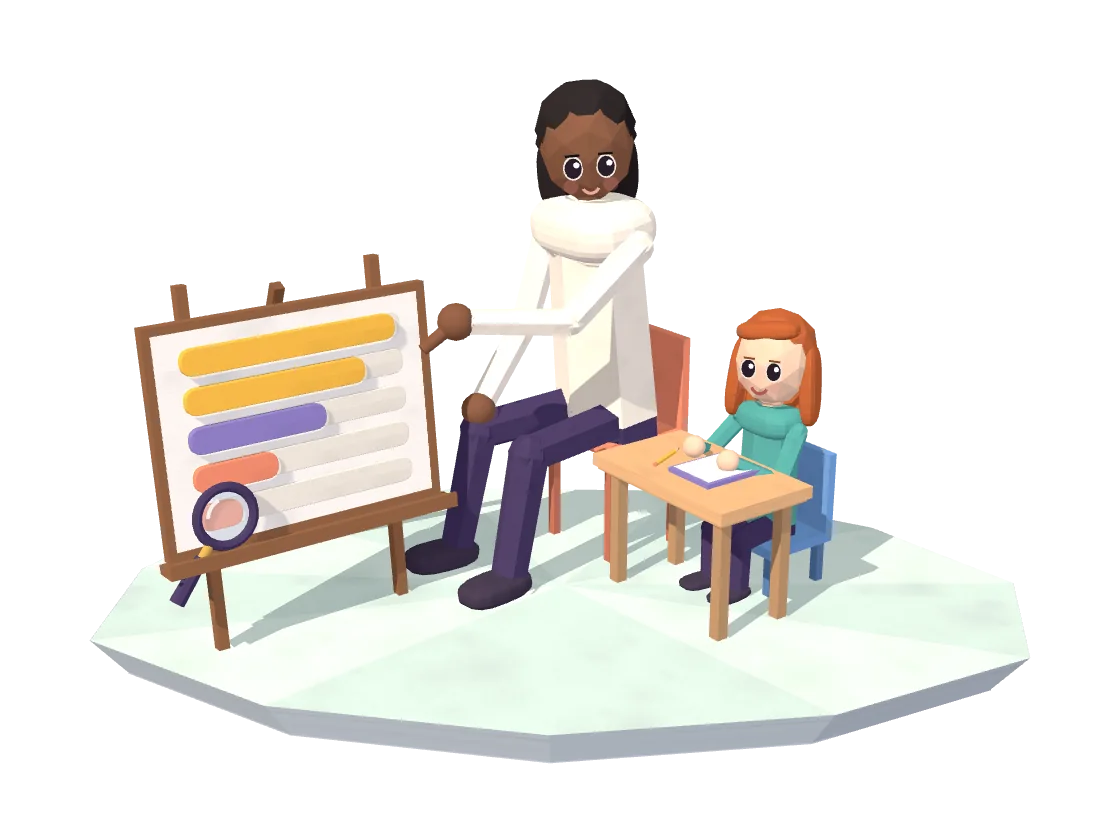
The same person every session, who knows your child by name.
A diagnostic assessment finds where a gap began, often in an earlier grade.
Your child moves on when a mastery check shows a skill is secure, not when the hour ends.
In plain words: what changed, why and what’s next.
Practice lines up with what your child is taught and assessed on at school.
Math, reading and writing, Grades 1 to 12, in either language.
The difference
Both have their place. Here is the same child and the same struggle, handled two ways.
Illustrative example.
| Typical tutoring | Hikmah Tutoring+ | |
|---|---|---|
| Where it starts | Tonight’s homework or the next test | A diagnostic assessment that finds where the gap began |
| What a session works on | The question in front of your child | The root skill first, then today’s work on solid ground |
| When your child moves on | When the session or the unit ends | When a mastery check with fresh questions shows it’s secure |
| Who works with your child | Not always the same person | One mentor who knows your child by name |
| What you hear | Often a quick word at pickup | A written progress update every month |
| Beyond the next test | Rarely part of the plan | Thinking and leadership, using AI well, real projects |
Many good tutors do some of this. Tutoring+ makes all of it part of every plan. See how Hikmah compares
Seven steps
Choose a step to see what happens, what you see and why it works.
Step 1 of 7
A friendly diagnostic assessment shows what they know, how they learn and where any gap began.
What happens
What you see
A summary in plain words: strengths, the root gaps and where to start.
Why it works
Assessment that shapes the teaching, not only the grade, is linked to substantial learning gains.
Step 2 of 7
A written learning plan, built around your child rather than a grade level.
What happens
What you see
The plan itself, with the first weeks laid out. You can ask about any line.
Why it works
Early skills predict later ones: fractions and division in elementary school predict high school algebra years later.
Step 3 of 7
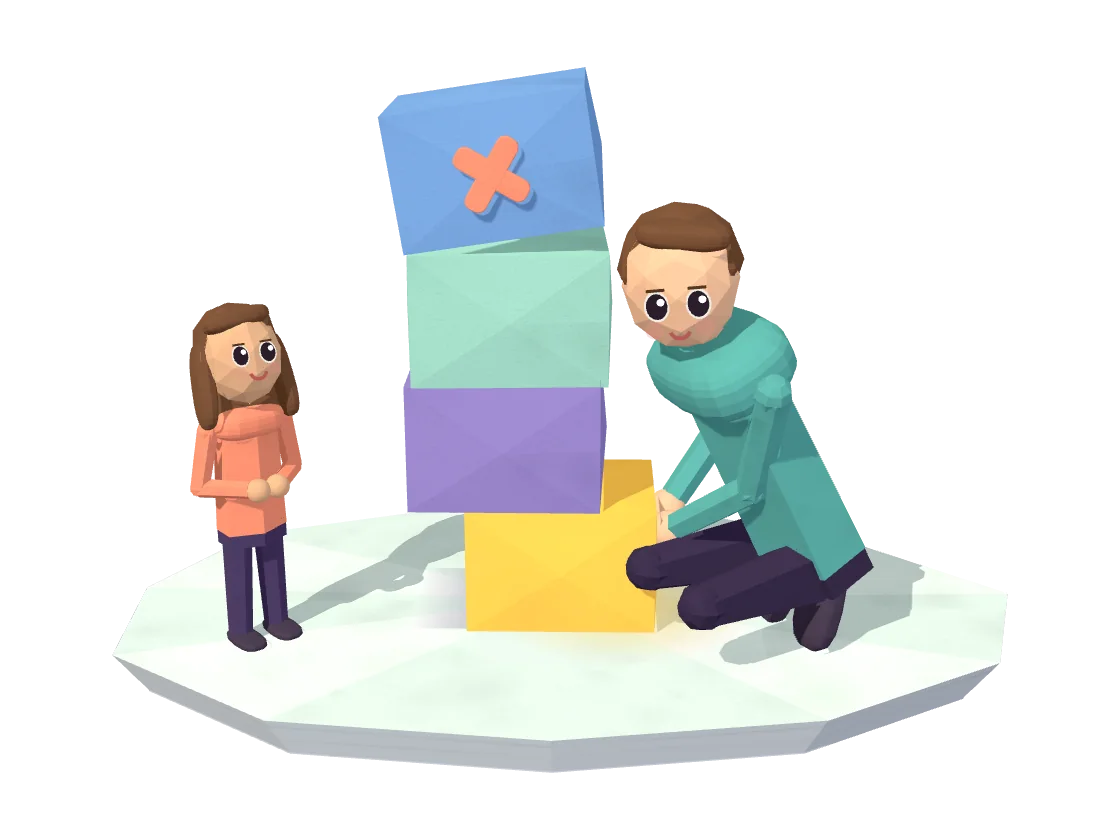
The same mentor knows your child by name and coaches rather than lectures.
What happens
Every mentor will be chosen, checked and trained. See how we choose them
What you see
One person to talk to, who can tell you exactly where your child stands.
Why it works
A review of 89 randomized trials found tutoring gives consistent, substantial gains, largest when tutors were teachers or paraprofessionals.
Step 4 of 7
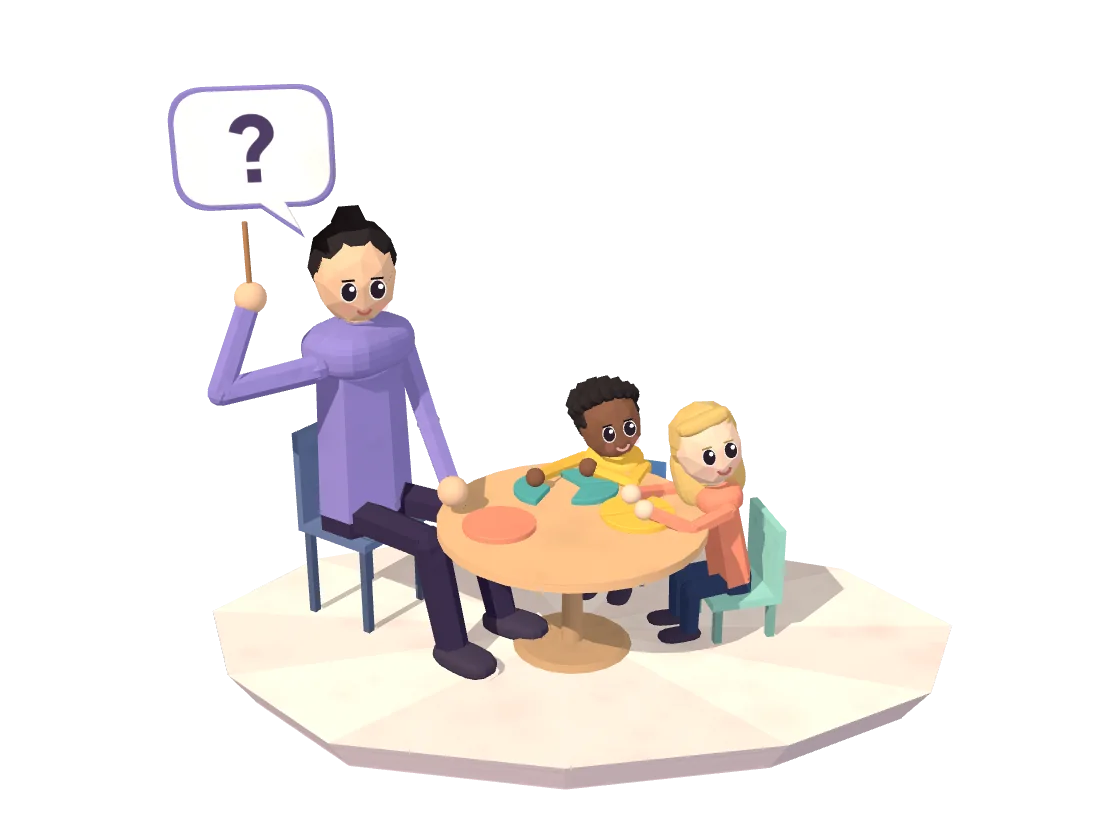
In each session, a missed question is traced to the skill underneath. We fix that, then check again.
What happens
What you see
What your child worked on, in the mentor’s notes, and something small to try at home.
Why it works
In a large classroom trial, mixing problem types led to much better scores on a surprise test a month later; the likely reason is practice in choosing the method.
Step 5 of 7
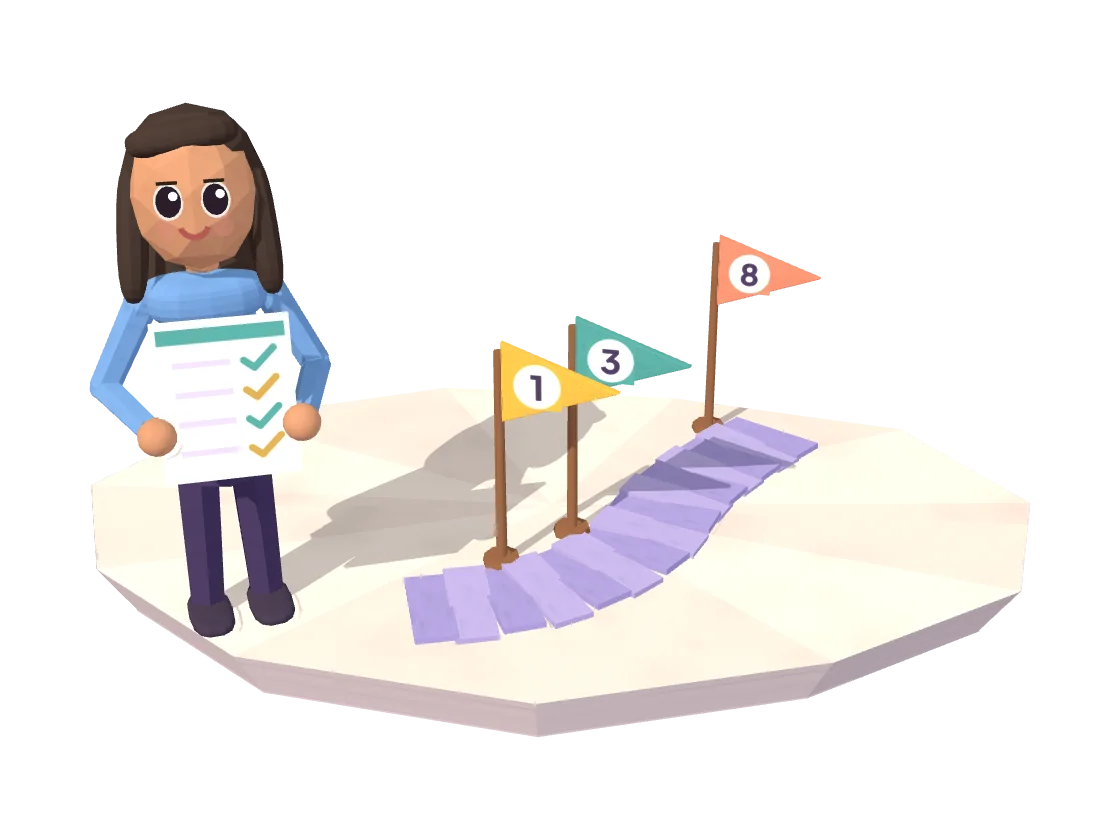
Short mastery checks with fresh questions, then return visits weeks later so skills stick.
What happens
What you see
Each mastered skill on your child’s mastery map, and when it was checked again.
Why it works
Recalling beats rereading, and practice spread out over time lasts longer than cramming.
Roediger and Karpicke (2006) (opens in a new tab)Cepeda and colleagues (2006) (opens in a new tab)
Step 6 of 7
Projects with a real audience: a business plan, a talk, an experiment, a piece of writing.
What happens
What you see
The finished work in a growing portfolio, and an invitation when there’s an audience.
Why it works
Well-run project units raised learning in a randomized trial; a review calls the approach promising, not yet proven.
Duke and colleagues (2021) (opens in a new tab)Condliffe and colleagues (2017) (opens in a new tab)
Step 7 of 7
A progress update every month, in plain words: what changed, why and what’s next.
What happens
What you see
A progress update you can read in two minutes, and a mentor you can reply to.
Why it works
Short, regular messages from teachers to parents helped students stay on track in a field experiment.
The same steps, for what your child needs now:
Follow one child
Follow Leo through 12 weeks, from his diagnostic assessment to his first progress update.
Leo
Grade 6
Week 1
Leo reads well above grade, but adding fractions keeps going wrong. The trace: equivalent fractions never settled, and his 7 and 8 times tables are slow.
Mentor’s note
Quick, curious, loves hockey stats. Let’s use that.
Illustrative example.
The plus
Once the foundations are secure, your child puts them to work: real projects for a real audience, the six capacities AI can’t replace, and AI used as a tool they direct.
What AI can’t replace
The family recipe book
How do we scale our family’s recipes for any number of guests?
Audience: her family, at the November dinnerSelect a stage to see what she does there.
Skills it puts to work
Her work so far
Mentor feedback
Your scaling table works. Now explain why 3/4 × 3 is 2 1/4 in your own words, for your grandmother.
Illustrative screen. The Hikmah platform is in development.
The research
Each practice rests on published research. Here is what the studies found, in plain words, with a link to every source.
| The practice | What the research found | Source |
|---|---|---|
| Mastery learningMove on when a skill is secure. | Across 108 controlled evaluations, mastery learning programs raised exam performance. The effects appeared stronger for the weaker students in a class. | Meta-analysisKulik, Kulik and Bangert-Drowns (1990) (opens in a new tab)Review of Educational Research, 60(2), 265–299 |
| TutoringOne mentor who knows your child. | A review of 89 randomized trials found consistent, substantial gains from tutoring, largest when tutors were teachers or paraprofessionals and met three or more times a week. | Review of randomized trialsNickow, Oreopoulos and Quan (2024) (opens in a new tab)American Educational Research Journal |
| Fixing earlier gapsTrace a missed question to its root. | In large studies in the United States and the United Kingdom, what children knew about fractions and division in elementary school predicted their algebra and overall math in high school, five or six years later. | Long-term studySiegler and colleagues (2012) (opens in a new tab)Psychological Science |
| Retrieval practiceShort, frequent mastery checks. | Students who practised recalling a passage remembered more of it days later than students who reread it; a meta-analysis found practice tests more helpful than restudying. | Experiment and meta-analysisRoediger and Karpicke (2006) (opens in a new tab)Psychological Science, 17(3), 249–255Adesope, Trevisan and Sundararajan (2017) (opens in a new tab)Review of Educational Research |
| Spaced practiceReturn visits, weeks later. | Across 317 experiments, spaced study led to markedly better recall than massed study; only 12 of 271 comparisons showed no benefit. | Meta-analysisCepeda and colleagues (2006) (opens in a new tab)Psychological Bulletin, 132(3), 354–380 |
| Mixed practiceMix problem types once a skill is secure. | In 54 Grade 7 math classes, students who practised mixed problem types scored 61% on a surprise test a month later, against 38% for those who practised one type at a time. | Randomized trialRohrer and colleagues (2020) (opens in a new tab)Journal of Educational Psychology, 112(1), 40–52 |
| Assessment that guides teachingThe diagnostic and every check shape the plan. | A major review found firm evidence that strengthening the frequent feedback students get about their learning yields substantial learning gains. | ReviewBlack and Wiliam (1998) (opens in a new tab)Assessment in Education: Principles, Policy and Practice, 5(1), 7–74 |
| Worked examples, then less helpShow the thinking, then hand it over. | Worked examples help in the early stages of learning a skill. As expertise grows, the same support can get in the way, so it should fade. | ReviewsAtkinson and colleagues (2000) (opens in a new tab)Review of Educational Research, 70(2), 181–214Kalyuga and colleagues (2003) (opens in a new tab)Educational Psychologist, 38(1), 23–31 |
| Feedback on the workSpecific next steps, never a label. | Feedback helps on average, more so the more it says about the task and how to improve. An earlier review found over a third of feedback interventions made performance worse. | Meta-analysesWisniewski, Zierer and Hattie (2020) (opens in a new tab)Frontiers in Psychology, 10, 3087Kluger and DeNisi (1996) (opens in a new tab)Psychological Bulletin, 119(2), 254–284 |
| A relationship that lastsThe same mentor, week after week. | Across 99 studies, warm teacher–student relationships went with stronger engagement and, more modestly, with achievement. These are associations, not proof of cause. | Meta-analysisRoorda and colleagues (2011) (opens in a new tab)Review of Educational Research, 81(4), 493–529 |
| Project-based learningA real product for a real audience. | In a randomized trial in 48 Grade 2 classrooms, project units raised social studies learning; reading gains were positive but not conclusive. A review calls the approach promising but not yet proven. | Randomized trial and reviewDuke and colleagues (2021) (opens in a new tab)American Educational Research JournalCondliffe and colleagues (2017) (opens in a new tab)MDRC working paper |
| Regular updates to familiesA progress update every month. | In a field experiment in a high school credit-recovery program, short weekly messages from teachers to parents cut the share of students who failed to earn course credit from about 16% to 9%. Messages about what to improve helped most. | Field experimentKraft and Rogers (2015) (opens in a new tab)Economics of Education Review, 47, 49–63 |
What this is, and isn’t
These are other researchers’ findings about these practices, not results from Hikmah. Hikmah isn’t open yet, so we have no results of our own, and we won’t borrow anyone else’s.
What we’ll measure, and publish
What the diagnostic finds, and how often the first plan has to change.
Each skill, from the first attempt to a clean mastery check.
What still holds at return visits, weeks and months later.
Whether you feel your child is known, and know where they stand.
Methods first, then results, once our first centre has run long enough to say something true.
Built for how children learn now
Four questions parents ask most about the day-to-day. Choose one.
Short practice blocks, and sessions that move between thinking, making and talking.
Each skill fills a mastery ring, practice builds a streak, and projects run as quests.
Our mastery map and every plan follow the Ontario curriculum for your child’s grade.
Mastery sets the pace, not the calendar: ahead when ready, gaps fixed at the root.
Illustrative screen. The Hikmah platform is in development.
Founding families get a free diagnostic assessment: a clear picture of where your child is, and where to start.