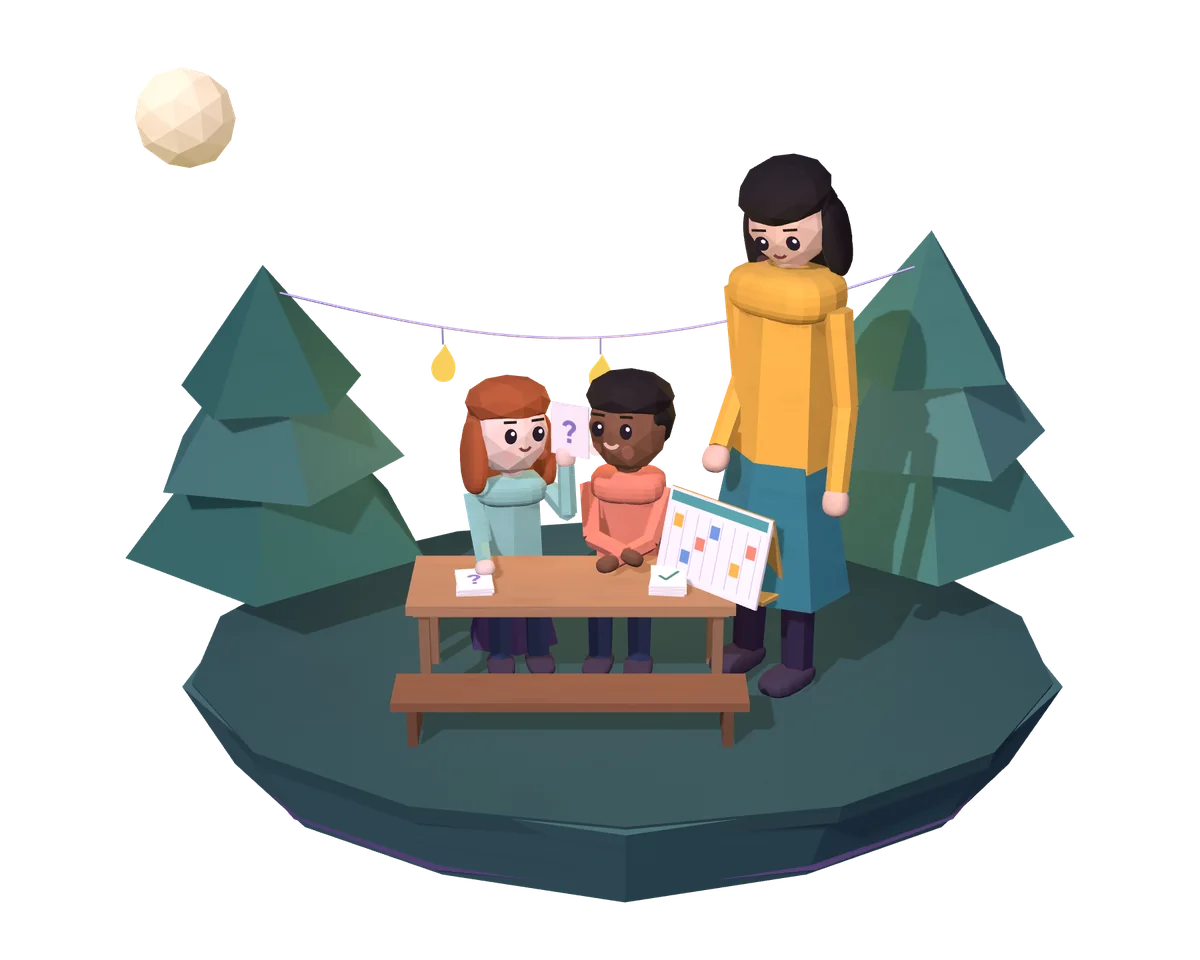

Study skills · Grades 4 to 12
Study skills, learned inside real schoolwork.
If your child studies for hours and it doesn’t show on the test, the method is often the problem, not the effort. We teach how to study, plan and remember, on their own courses, not in a separate lecture.
- Grades 4 to 12
- One mentor
- Built into their own schoolwork
- Coming soon to Ottawa
Who it’s for
Hours of studying, and the marks don’t move?
Situations parents often describe. Many come down to habits nobody taught.
Rereads the notes until they feel familiar.
Familiar isn’t the same as remembered. In a well-known experiment with university students, rereading made them more confident, but testing themselves helped them remember more a week later.
Studies everything the night before.
Cramming feels efficient. Reviews spread over days and weeks hold up better, and that matters by the final exam.
Gets every question right in the unit, then blanks on the mixed test.
Practising one type of problem at a time skips a hard part of any test: deciding which method a question needs.
A big project, started two nights before it’s due.
Big assignments need breaking into steps, each with a date. It’s a skill, and it can be taught.
The phone is always within reach.
Every notification is an interruption. Ontario schools already limit phones in class; we help your child do the same when studying.
The report card comments on organization or independent work.
Ontario report cards describe learning skills and work habits, including organization, independent work and self-regulation. They are skills, and skills can be practised.
Recognize your child here? A diagnostic assessment is the first step, and it will be free for founding families. See how Hikmah approaches it
How we approach it
Study habits built on real work, one at a time.
The same six steps as every Hikmah program, applied to how your child studies.
The diagnostic
How they study now
A diagnostic assessment looks at the subjects and at the habits: how your child prepares for a test, plans the week and handles a long assignment.
The root
Habit or gap?
Low marks can come from a study habit, or from a skill missing underneath. We check both, so we fix the right one.
The plan
A written learning plan
One habit at a time, built around their real courses, units and test dates. Your child reads it and helps change it.
One mentor
A mentor who coaches the habit
The same mentor shows each habit on this week’s work, then hands it over until your child does it alone.
Mastery checks
Checked, not assumed
A habit counts as learned when your child uses it without a reminder. Mastery checks in their subjects show whether it’s working, and we come back to it weeks later.
Updates and the +
A monthly update, and the +
What changed, what’s next and one thing to try at home. The +: planning their own weeks and knowing which study methods work for them, for school and after it.
A session · Study skills · Tariq, Grade 9
- Plan the weekTests and due dates first.
- Self-testLast week’s science, from memory.
- Mixed practiceMixed math types; he picks the method.
- Mastery checkFresh questions on what he studied.
- Explain it backOne idea, in his own words.
Six study habits
Six habits, each learned on real work.
What each habit is, and how a mentor will build it into your child’s week.
Remember
Test yourself instead of rereading
Close the book, recall what you can, then check. In research, self-testing beat rereading for remembering days later, and it shows exactly what isn’t learned yet.
At Hikmah
- Practice questions and flash cards made from their own notes
- A recall warm-up at the start of every session
- Answers checked, and the missed ones tried again
Remember
Space reviews out
A little review over several days and weeks, instead of one long session the night before. In research, spaced practice led to better recall than the same practice crammed together.
At Hikmah
- A review calendar worked back from each test date
- Earlier units brought back before the final exam
- Shorter reviews, more often
Practise
Mix problem types once a skill is secure
While a skill is new, practise it on its own. Once it’s secure, mix it with earlier ones: choosing the method is part of what a test asks.
At Hikmah
- Mixed problem sets in math and science
- “What kind of problem is this?” before solving
- Mistakes sorted by type, to see which methods get confused
Understand
Explain it in your own words
Saying why each step works, out loud or on paper, shows whether an idea is understood or only memorized.
At Hikmah
- One idea taught back to the mentor each session
- Notes rewritten as answers to “why” and “how” questions
- A shaky explanation traced to the skill underneath
Plan
Plan the week, and break big work into steps
A week planned around tests and due dates, and every big assignment split into small steps with their own dates. Organization is one of the learning skills and work habits on Ontario report cards.
At Hikmah
- A weekly plan made with your child, not for them
- Big assignments split into steps, each with a date
- A look back each week: what worked, what to change
Ontario: report cards and learning skills (opens in a new tab)
Focus
Protect study time: phone away
One task at a time, with the phone in another room. In Ontario schools, students in Grade 6 and below may not use phones during the school day, and older students may not during class time, except for learning at a teacher’s direction, or for health or special education needs.
At Hikmah
- Short, timed study blocks with real breaks
- A plan for the phone that your child agrees to
- Finding out with your child when and where they focus best
Study skills coaching is not a diagnosis or a treatment. If you’re concerned about your child’s attention or learning, talk to their school or your doctor. School policies change, so check the official pages.
How it’s different
Study tips are easy to hear. Habits are built on real work.
Two ways to learn study skills: tips in a workshop, or habits built on your child’s own work.
| Workshop | Tutoring+ | |
|---|---|---|
| Works on | General tips | Your child’s own courses, tests and assignments |
| Practice | Mostly at home, on their own | In every session, on this week’s work |
| It worked when | The tips have been covered | Your child uses the habit without a reminder |
| You hear | Not usually part of it | A progress update every month |
| Beyond this term | A handout of tips | Planning their own weeks, and knowing which study methods work for them |
Illustrative example. Session plans and lengths will be shared with founding families before we open.
What you receive
You’ll see the habits change, not only the marks.
Plain words, from the person who knows how your child studies.
- After the diagnostic
- How your child studies now, which habits help, which don’t and any skill gap underneath.
- A written learning plan
- One habit at a time, built around their real courses and test dates.
- A progress update every month
- Habits in use, skills mastered, what’s next and one thing to try at home.
- A mentor to talk to
- The same person every time, who knows your child’s courses and how they study.
The research
Built on what the research shows about studying.
Hikmah hasn’t opened, so we have no results of our own yet. Here is what the studies found, in their own terms.
Which techniques help
A review of ten common study techniques rated practice testing and spreading study over time as high utility, and rereading and highlighting as low. Self-explanation and mixing problem types were rated moderate, because the evidence for them was more limited.
At Hikmah: Practice questions and spaced review come first in every plan; rereading and highlighting are never the whole method.
Self-testing
In lab experiments with university students, those who took recall tests on prose passages remembered more a week later than those who reread them. On a test five minutes later, rereading had done better, and it made students more confident.
At Hikmah: Your child learns to test themselves, and to trust what recall shows over how familiar the notes feel.
Spacing
A review of 317 experiments, mostly with adults learning words and facts, found that spacing study out led to markedly better recall than massing it together.
At Hikmah: Reviews are planned back from each test date, a little at a time, and earlier units come back before the final exam.
Mixed practice
In 54 Grade 7 math classes, students who practised mixed problem types scored 61% on a surprise test a month later, against 38% for those who practised one type at a time.
At Hikmah: Once a skill is secure, practice mixes it with earlier ones, so your child learns to choose the method.
Questions from parents
What parents ask about study skills.
Is this a separate course?
No. Study skills are learned on your child’s real courses, tests and assignments, inside their sessions, so every habit is practised on work that counts.
What if my child has trouble focusing, or has ADHD?
Study skills coaching is not a diagnosis or a treatment. If you’re concerned about attention or learning, talk to your child’s school or doctor. If your child has an IEP or other support, share what you’re comfortable sharing, and their mentor will work alongside it.
What age is right to start?
Study skills coaching is for Grades 4 to 12. Younger children start simply: recall before checking, and a short plan for the week. In high school it grows into test plans and long assignments broken into steps.
Will it help with exams?
Exams are where these habits are used most. The plan works back from each test date: self-testing, spaced reviews and mixed practice, then a mastery check. We won’t promise a mark; each update shows you which habits your child is using.
My teen doesn’t want to change how they study. What then?
Many don’t, at first. Their mentor helps them try one habit on a real test and compare, and the plan is theirs to read and change. Their mentor works with them, not on them.
Is it available in French?
Hikmah will be bilingual from the day it opens, and sessions will be in English or French. How sessions in French will run will be shared with founding families before we open.
Where to go next