
Where they shine
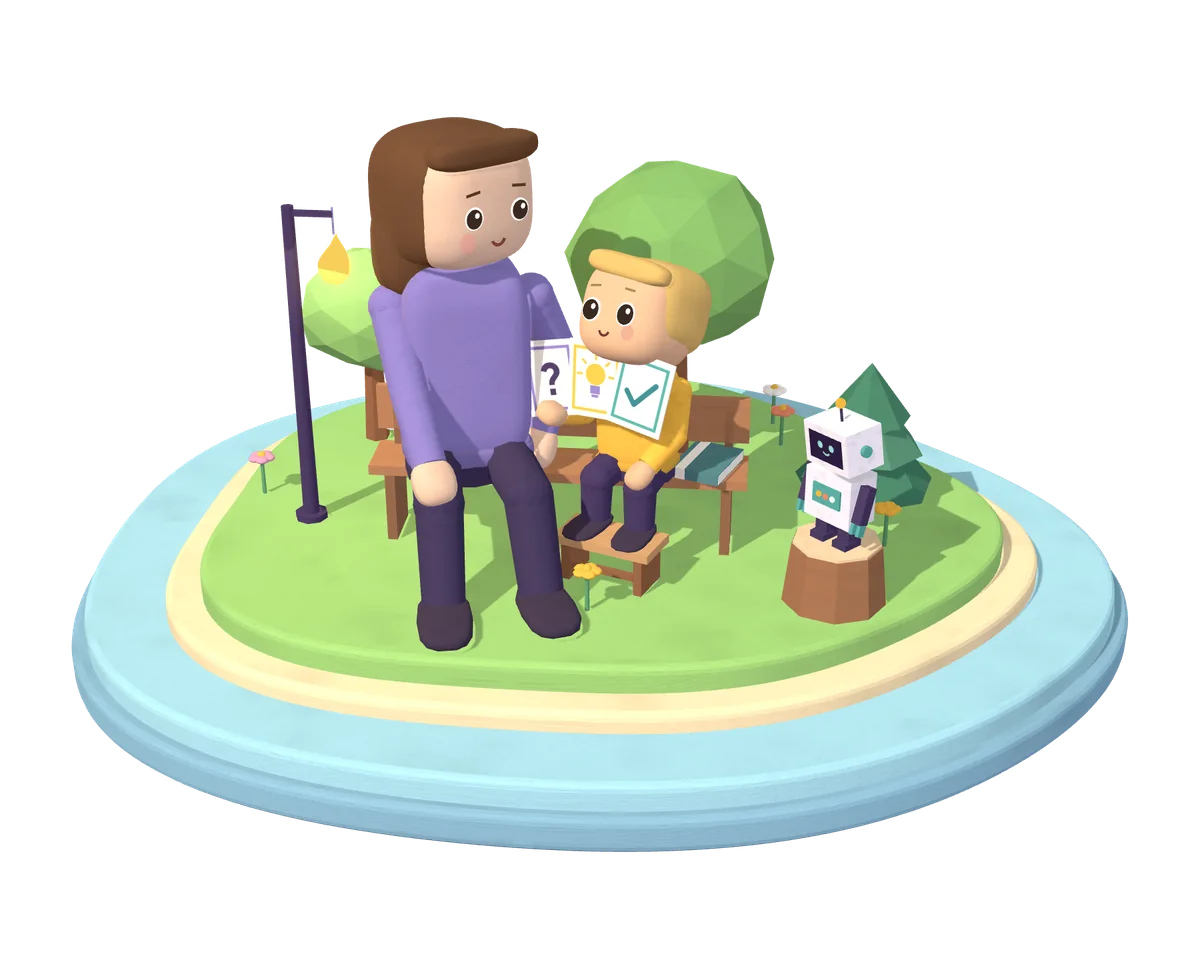
AI-readiness check
How ready is your child for a world with AI?
Your child, in 12 statements: choose how often each one sounds like them. It’s a reflection for parents, not a test, so there are no wrong answers.
- 12 statements
- About three minutes
- Grades 1 to 12
- A personal report for your child
The Hikmah centre sent you this check. When you finish, your answers and results go to the centre, so your child’s mentor can go through them with you.
The check
Twelve statements. One clear picture.
Read each statement about your child and choose how often it sounds like them. It takes about three minutes, and there are no wrong answers.
A profile of six capacities
Drawn from your answers: how often you see each one today.
A strength and a starting point
Where your child shines, and the best place to begin.
Three ideas for this week
Small things to try at home, and a one-page report to keep.
Start the check
Free. You’ll see your child’s full report as soon as you finish.
Why these six, why now
What employers, researchers and families are already seeing.
7 in 10
employers call analytical thinking an essential skill in 2025, and they expect 39% of today’s skills to change or become outdated by 2030.
World Economic Forum, The Future of Jobs Report 2025 (opens in a new tab)
7 in 10
teens aged 13 to 18 in the United States have used generative AI, and 2 in 5 have used it for school assignments. Of the parents whose teen had used it, only 37% knew.
Common Sense Media, The Dawn of the AI Era, 2024 (opens in a new tab)
1 in 10
Canadian 15-year-olds (11%) did not reach the baseline in creative thinking in PISA 2022, even though Canada placed second in the world, behind only Singapore.
Council of Ministers of Education, Canada, PISA 2022 Creative Thinking (opens in a new tab)
The check
The check, one statement at a time
Keys: 1 to 4 to answer, arrows to move, Enter to go on, Backspace to go back.
Your results
Here’s what you see in your child.
A picture drawn from your 12 answers. The further a point reaches, the more often you see that capacity today.
As the centre’s link said, these results go to the Hikmah centre, so your child’s mentor can go through them with you.
- Thinks critically
- Creates
- Solves problems
- Communicates
- Leads
- Uses AI well
Where to start
An informal reflection on how you see your child today, not a test or a diagnosis. There are no averages or norms here: it compares your child only with your own answers.
What your child may be missing
The capacities you see least often today, what that looks like, and why each one matters more as AI does more. None of this is fixed: these are the habits a good mentor builds.
Thinks critically
Why it matters nowAI gives confident answers. Someone has to judge which ones hold up.
Creates
Why it matters nowAI remixes what exists. New work starts with a person who sees what is missing.
Solves problems
Why it matters nowReal problems arrive messy and unlabelled. Framing them is human work.
Communicates
Why it matters nowTrust, persuasion and a clear explanation still happen between people.
Leads
Why it matters nowTeams and communities need people who take responsibility.
Uses AI well
Why it matters nowThe new literacy: knowing when to trust AI, when to check it and when to leave it out.
Why these six, why now
What employers, researchers and families are already seeing.
7 in 10
employers call analytical thinking an essential skill in 2025, and they expect 39% of today’s skills to change or become outdated by 2030.
World Economic Forum, The Future of Jobs Report 2025 (opens in a new tab)
7 in 10
teens aged 13 to 18 in the United States have used generative AI, and 2 in 5 have used it for school assignments. Of the parents whose teen had used it, only 37% knew.
Common Sense Media, The Dawn of the AI Era, 2024 (opens in a new tab)
1 in 10
Canadian 15-year-olds (11%) did not reach the baseline in creative thinking in PISA 2022, even though Canada placed second in the world, behind only Singapore.
Council of Ministers of Education, Canada, PISA 2022 Creative Thinking (opens in a new tab)
Capacity by capacity
Thinks critically
- At home
- Asks how we know, weighs a claim, and can say why an answer is right.
- In a world with AI
- AI gives confident answers. Someone has to judge which ones hold up.
Creates
- At home
- Starts things of their own and finds more than one way to do them.
- In a world with AI
- AI remixes what exists. New work starts with a person who sees what is missing.
Solves problems
- At home
- Stays with a hard problem, breaks it down and tries another way.
- In a world with AI
- Real problems arrive messy and unlabelled. Framing them is human work.
Communicates
- At home
- Explains an idea clearly, out loud and on the page, in their own voice.
- In a world with AI
- Trust, persuasion and a clear explanation still happen between people.
Leads
- At home
- Takes responsibility with others and finishes what they start.
- In a world with AI
- Teams and communities need people who take responsibility.
Uses AI well
- At home
- Uses AI and search to build and learn, and checks what they are told.
- In a world with AI
- The new literacy: knowing when to trust AI, when to check it and when to leave it out.
Three things to try at home this week
Chosen from your answers. Small, ordinary moments are where these capacities grow.
Hikmah Tutoring+
How we’d build on what you see
Tutoring for today. Readiness for tomorrow.
Catch up where it counts
If your child is struggling in math, reading or writing, a diagnostic assessment finds the root gap, often a skill from an earlier grade.
A plan and a mentor
A written learning plan, one mentor who knows your child, short mastery checks and a progress update every month.
The +
Real projects that build all six capacities, with AI as a tool your child directs, not a shortcut.
Founding families get a free diagnostic assessment.
What happens next for your child
A Hikmah mentor will be in touch to walk you through this report. Founding families get a free diagnostic assessment: your child does the work, and it shows exactly where each gap begins.
What it looks at
Six things that matter more as AI does more.
Five capacities AI can’t exercise for your child, and a sixth every family now faces: using AI well.
Thinks critically
Why it lastsAI gives confident answers. Someone has to judge which ones hold up.
Creates
Why it lastsAI remixes what exists. New work starts with a person who sees what is missing.
Solves problems
Why it lastsReal problems arrive messy and unlabelled. Framing them is human work.
Communicates
Why it lastsTrust, persuasion and a clear explanation still happen between people.
Leads
Why it lastsTeams and communities need people who take responsibility.
Uses AI well
Why it lastsThe new literacy: knowing when to trust AI, when to check it and when to leave it out.
Going deeper
Our diagnostic sees what a checklist can’t.
This check is how you see your child. Hikmah Tutoring+ begins with a diagnostic assessment in which your child does the work: it adapts as they go and traces each gap to the skill where it begins.
Dive inExplore Tutoring+SofiaGrade 4
Diagnostic reportWhere she is, strand by strand
Grade 4 expectation
Where the gap begins
How she thinks
- Counts on her fingers for 7 × 8
- Explains her reasoning clearly out loud
- Reads above grade; loves comics
Select a strand or a step to see what her mentor sees.
Ready for Grade 5 reading. First, rebuild multiplication facts.
MReviewed with her mentorIllustrative screen. The Hikmah platform is in development.
Questions
What parents ask about the check.
What ages is it for?
Any child from Grade 1 to Grade 12. For younger children, answer the AI statements for any screen or tool they use.
What happens to my answers?
The scoring happens in your browser. When you ask for the full report, your answers, your results and the details you give go to Hikmah, so a mentor can walk you through them, and they are kept in Canada. We use them only to talk with you about your child, and we remove personal information within 12 months, or sooner if you ask. If the Hikmah centre sent you a link to the check, your results go to the centre, and the page says so before you start.
My child scored low in one area. Should I worry?
No. The check reflects how often you notice something today, and children change quickly. Start with this week’s ideas, and try the check again in a few months.
Can I keep a copy?
Yes. From your results, print the one-page report or save it as a PDF.